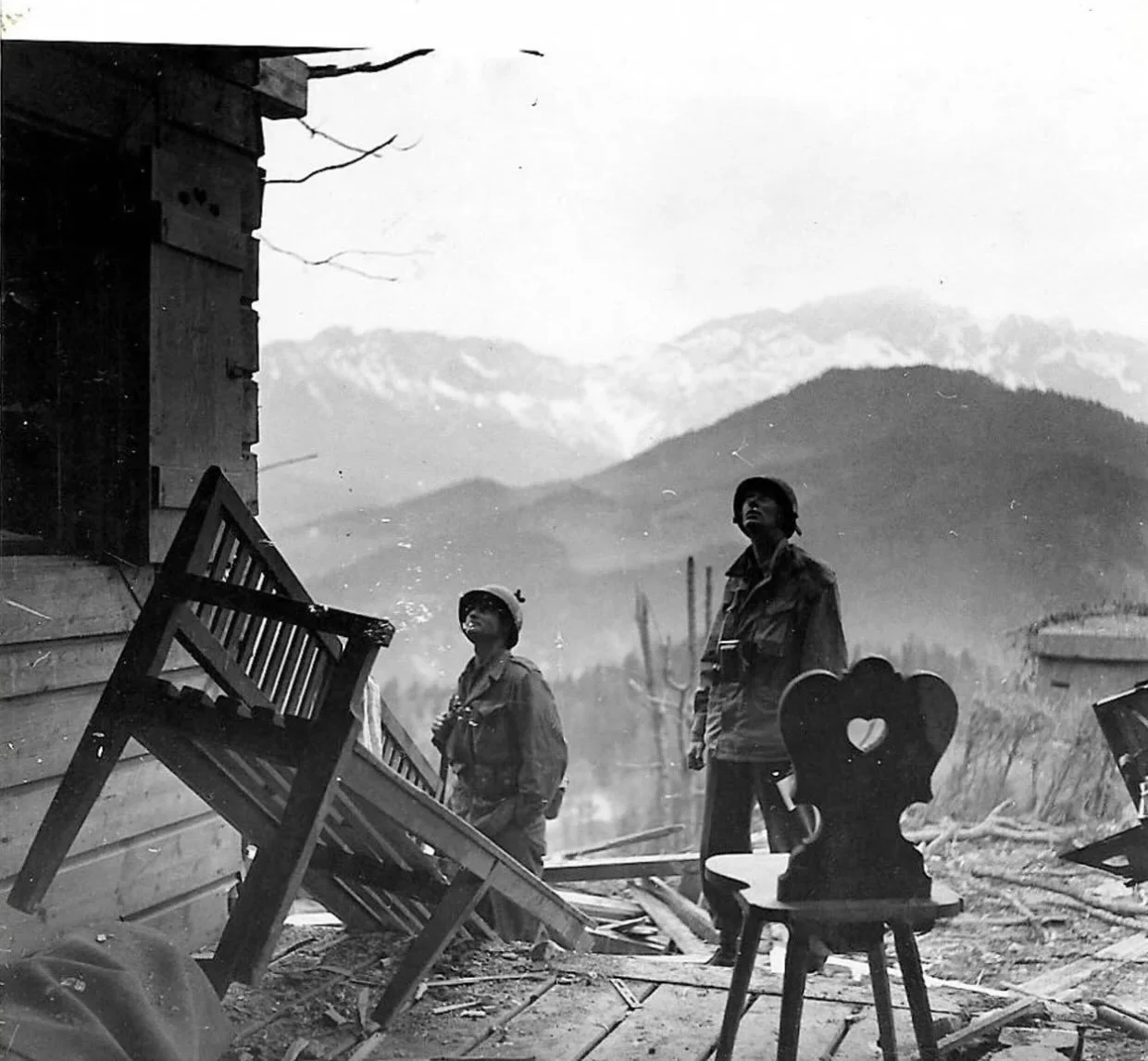
In the final days of World War II, Allied troops raced to capture Hitler’s house, the Berghof – high in the Bavarian mountains.
For years, this secluded retreat existed far apart from the world below – an Alpine idyll of sunlit terraces, picture windows and political theatre. It was here that Hitler and his inner circle met, planned, and decided the course of a war that set the world on fire.
By May 1945, it had become the final refuge of a collapsing regime.
In the hours and days that followed, American and French soldiers swept through the buildings. The first arrivals took the crystalware, silver and manuscripts – stuffing their finds into haversacks, pockets and pouches. Latecomers scavenged whatever was left – books, linens, scraps of carpet. The war was over and Hitler was “kaput”.
Their spoils were shipped or carried home as souvenirs – quickly becoming family keepsakes or objects of curiosity. As the war became a distant memory and the world moved on, many of these treasures and trinkets were discarded, destroyed, or sealed away for decades in old footlockers.
What you see here are the pieces that survived. The physical debris of a nightmare – each one a quiet witness to the 20th century’s greatest tragedy.
Once scattered to the wind, now brought back together.
For a time at least.